Industrial piping systems need reliable connections that can handle the specified pressure, temperature, and process conditions. SS Threaded Fittings for Pressure Piping and Process Connections help connect pipeline components where threaded joints are suitable. Meghmani Projects Pvt. Ltd. provides manufacturing support from Ahmedabad, Gujarat, India.
Understanding How Threaded Connections Fit Into Industrial Piping
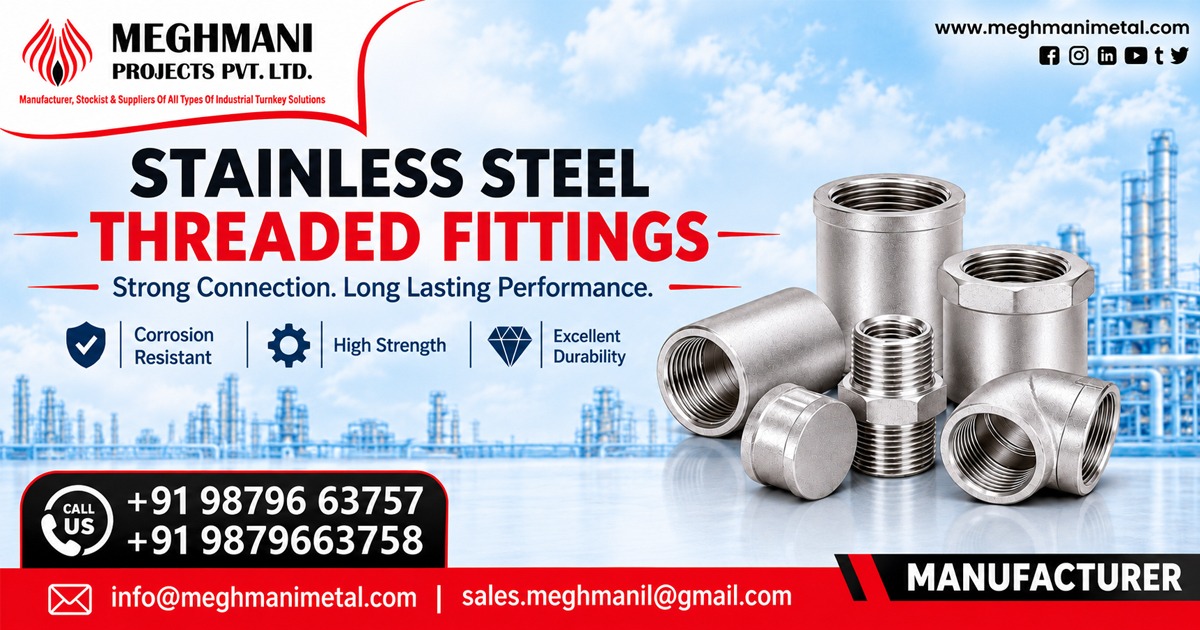
Stainless steel threaded fittings are used to connect pipes, valves, instruments, and other pipeline components through matching threads. They are particularly useful in piping arrangements where a threaded connection is preferred over welding or flanged joints.
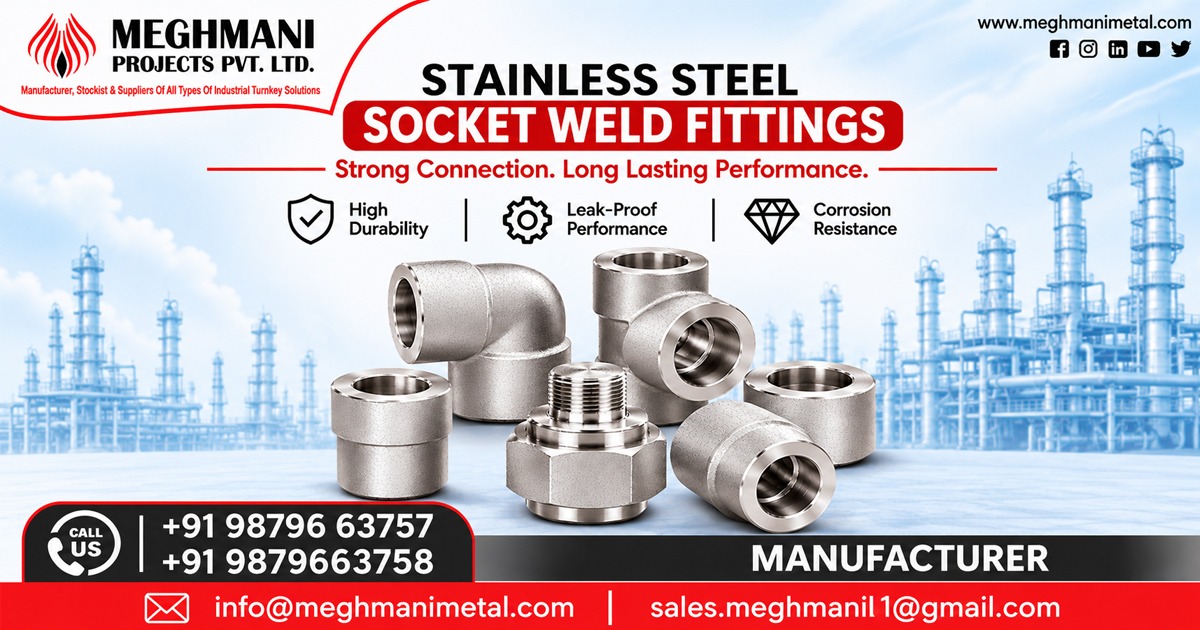
Depending on the piping design, common fitting types include:
- Threaded Elbows: Change the direction of a pipeline, commonly at 90-degree or other specified angles.
- Threaded Tees: Create a branch connection from the main pipeline.
- Threaded Couplings: Join two threaded pipe sections.
- Threaded Unions: Allow pipeline sections to be disconnected for inspection or maintenance.
- Threaded Plugs and Caps: Close unused openings or terminate pipeline connections.
- Threaded Nipples: Connect components with internally threaded ports.
These fittings are available in different configurations and dimensions. Their suitability depends on the piping standard, thread type, material grade, and operating conditions.
Pressure Conditions Should Guide the Fitting Selection
A threaded connection must be selected according to the actual service conditions rather than appearance or nominal pipe size alone.
Industrial buyers should evaluate the following factors:
Operating Pressure: Confirm the working pressure and any pressure variations expected during operation. The fitting’s pressure rating must be suitable for the intended service.
Temperature Exposure: Temperature affects material behaviour and the sealing arrangement. Consider both normal operating and possible temperature fluctuations.
Fluid Compatibility: Check whether the stainless steel grade is suitable for the fluid being transported. Chemical composition, concentration, and operating temperature can influence material selection.
Thread Compatibility: Confirm whether the connection requires BSP, NPT, or another specified thread form. Different thread standards should not be assumed interchangeable.
Connection Design: Consider whether the fitting will connect a pipe, valve, pump, instrument, or equipment port.
For buyers sourcing SS Threaded Fittings for Pressure Piping and Process Connections, these checks help prevent mismatched connections and unnecessary modifications during installation.
Material Grade and Thread Quality Need Equal Attention
Stainless steel selection is an important part of pressure piping procurement. Grades such as SS 304 and SS 316 are commonly considered for industrial fittings, but the correct choice depends on the application.
- SS 304: Often considered for general industrial and utility piping where its corrosion resistance is suitable.
- SS 316: May be preferred for certain applications requiring improved resistance to corrosive environments, subject to fluid compatibility.
Apart from the material grade, buyers should examine the following quality aspects:
- Thread profile and dimensional consistency.
- Surface finish and visible manufacturing defects.
- Proper alignment between threaded ends.
- Consistency of fitting dimensions.
- Material identification and traceability documents, where required.
- Relevant inspection and testing records according to project specifications.
Thread damage, incorrect pitch, or poor alignment can create installation difficulties and affect joint integrity.
Where These Fittings Connect With Industrial Processes
Threaded stainless steel components can be considered for different industrial piping arrangements, provided the connection design is suitable for the service conditions.
Typical requirements include:
- Chemical Processing: Connections between process lines, valves, and selected equipment ports.
- Water Treatment: Pipe connections in utility and treatment-related systems.
- Food and Beverage Plants: Selected utility and process-support connections where the design permits threaded joints.
- Pharmaceutical Facilities: Connections in specified utility arrangements, subject to applicable hygiene and piping requirements.
- Industrial Manufacturing: Air, water, and other compatible fluid distribution lines.
- Mechanical Equipment: Connections involving pumps, instruments, and auxiliary piping.
Threaded joints are not automatically suitable for every high-pressure or critical process line. Welding, flanged, or other connection methods may be more appropriate depending on the engineering design and applicable standards.
Installation Practices That Help Avoid Connection Problems
Correct installation is essential for maintaining the intended performance of threaded piping connections.
Consider the following sequence:
1. Inspect Before Assembly: Check the fitting for damaged threads, contamination, corrosion, or visible defects.
2. Verify Thread Matching: Confirm the thread type, size, and compatibility of the connecting components.
3. Prepare the Connection: Clean the mating threads and select a compatible thread-sealing method according to the service requirements.
4. Assemble Carefully: Use suitable tools and follow the specified tightening procedure. Avoid excessive force that could damage the threads.
5. Check Alignment: Ensure the connected components are properly positioned without unnecessary mechanical stress.
6. Conduct Appropriate Testing: Perform the specified leak or pressure testing before putting the piping system into service.
Installation should follow the approved engineering procedure, especially where hazardous, corrosive, or pressurised fluids are involved.
Inspection and Maintenance During Regular Plant Operation
Threaded connections can become difficult to maintain when they are installed in inaccessible areas or exposed to vibration, temperature changes, and corrosive conditions.
A practical inspection approach should include:
- Checking accessible joints for leakage or visible corrosion.
- Inspecting fittings exposed to vibration or mechanical movement.
- Examining threads whenever a connection is dismantled.
- Checking for signs of loosening or external damage.
- Reviewing sealing arrangements during reassembly.
- Keeping suitable replacement fittings available for maintenance requirements.
| Observed Issue | Possible Reason | Recommended Check |
| Leakage around a joint | Incorrect sealing or thread mismatch | Inspect thread compatibility and sealing arrangement |
| Difficult assembly | Damaged or incompatible threads | Check thread profile and dimensions |
| Visible corrosion | Unsuitable material for service conditions | Review fluid compatibility and material grade |
| Repeated joint loosening | Vibration or mechanical stress | Examine piping support and alignment |
| Damaged fitting surface | Improper handling or installation | Inspect the fitting before reuse |
Damaged pressure-containing components should be replaced rather than subjected to improvised repairs.
Services
Meghmani Projects Pvt. Ltd. can assist with industrial threaded fitting requirements through the following service areas:
1. Stainless Steel Threaded Fitting Supply: Sourcing and supply coordination for threaded pipeline connection requirements.
2. Fitting Configuration Selection: Assistance in identifying suitable elbows, tees, couplings, unions, plugs, and nipples.
3. Material and Dimension Coordination: Support in reviewing stainless steel grades, thread specifications, and required fitting dimensions.
4. Industrial Piping Requirement Support: Coordination for project-specific fitting requirements based on application and technical specifications.
Location
Industrial demand for stainless steel piping components across Gujarat comes from engineering projects, chemical plants, process industries, infrastructure development, and manufacturing facilities. Requirements for threaded pipeline connections are relevant across Ahmedabad, Sanand, Changodar, Bavla, Vatva, Naroda, Odhav, Kathwada, Chhatral, Kalol, Kadi, Mehsana, Gandhinagar, Dahej, Bharuch, Ankleshwar, Vadodara, Halol, Vapi, Valsad, Surat, Rajkot, Morbi, Jamnagar, and Bhavnagar.
Industrial Piping Requirement Coordination With Meghmani Projects Pvt. Ltd.
Selecting the correct threaded fitting involves more than matching pipe dimensions. Material compatibility, thread configuration, pressure conditions, and installation requirements must be considered together.
Meghmani Projects Pvt. Ltd. supports industrial product requirements through its website, meghmanimetal.com. With manufacturing support from Ahmedabad, Gujarat, India, the company can assist buyers in discussing product configurations, material requirements, and project-related fitting specifications.
Buyers can share their technical requirements, drawings, preferred material grades, and connection details to help establish suitable product specifications before procurement.
Frequently Asked Questions
Q1. Which stainless steel grade is suitable for industrial threaded fittings?
A: SS 304 and SS 316 are commonly considered options. The appropriate grade depends on the transported fluid, corrosion exposure, temperature, and operating environment.
Q2. What is the difference between BSP and NPT threaded fittings?
A: BSP and NPT use different thread profiles and standards. Their dimensions and engagement characteristics differ, so buyers should confirm the required thread specification before ordering.
Q3. Can threaded stainless steel fittings be used in high-pressure pipelines?
A: They can be used where the fitting’s pressure rating, connection design, and applicable piping requirements permit. The suitability must be verified for the specific operating conditions.
Q4. What information should buyers provide when ordering threaded fittings?
A: Share the fitting type, stainless steel grade, nominal size, thread standard, pressure and temperature conditions, quantity, and any applicable drawings or technical specifications.
Conclusion
Reliable threaded piping connections depend on correct material selection, compatible threads, suitable pressure ratings, and careful installation. Buyers evaluating SS Threaded Fittings for Pressure Piping and Process Connections in Ahmedabad should confirm these details before procurement. Meghmani Projects Pvt. Ltd. offers manufacturing support from Ahmedabad, Gujarat, India, for industrial requirements.
Discuss your stainless steel threaded fitting specifications with Meghmani Projects Pvt. Ltd. to coordinate suitable product requirements for your industrial piping project.
Call Us:
Sales: (+91) 98 79 663757
Support: (+91) 98 79 663758
Email Us:
Sales: sales.meghmani11@gmail.com
General: info@meghmanimetal.com