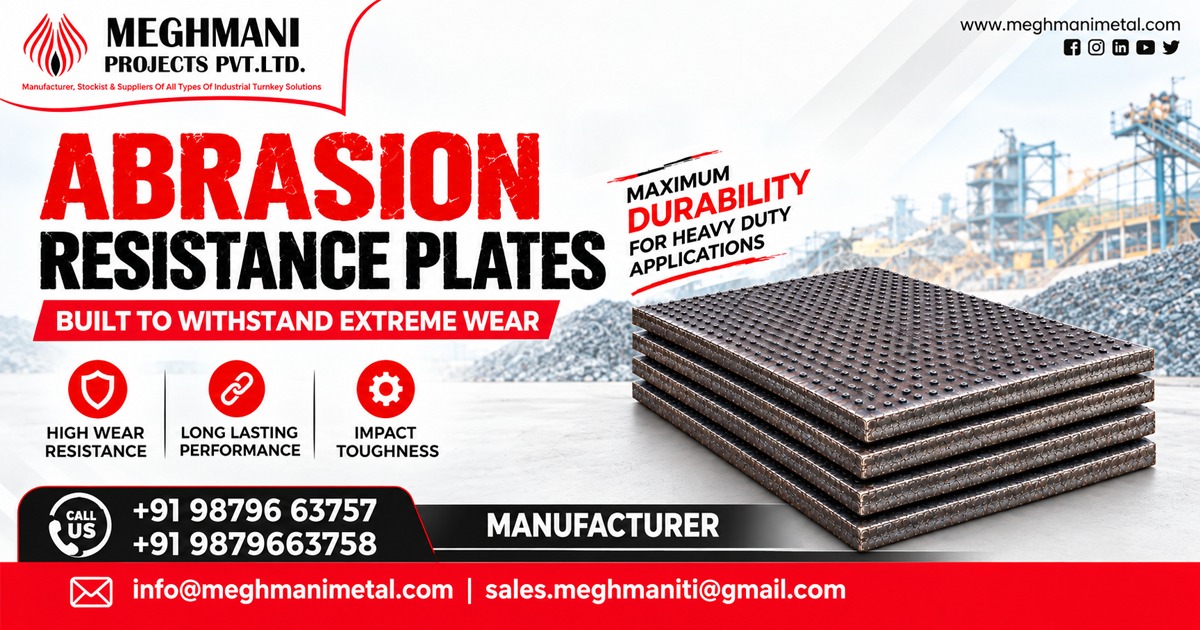
Industrial equipment handling abrasive materials can experience surface wear, frequent repairs, and unplanned downtime. Choosing the right abrasion-resistant plate helps manage these challenges. Meghmani Projects Pvt. Ltd. provides manufacturing support from Ahmedabad, Gujarat, India, for buyers in Vapi seeking suitable material solutions.
Why Abrasion Resistance Matters in Industrial Operations
Industries that handle minerals, aggregates, scrap, and other abrasive materials often face wear on equipment surfaces. Repeated friction and material impact can gradually reduce plate thickness, affect equipment performance, and increase maintenance requirements.
For industrial units in Vapi, selecting suitable abrasion-resistant plates can help address wear in material-handling systems and equipment exposed to demanding operating conditions. The correct material depends on the type of abrasive material, impact level, operating environment, and expected service conditions.
A well-planned material selection process also helps buyers evaluate maintenance intervals, replacement needs, and the overall cost of operating equipment.
How to Select the Right Abrasion-Resistant Plate
Before choosing an abrasion resistance plate, buyers should review the actual working conditions rather than selecting material based on hardness alone.
- Material suitability: Identify whether the plate will face sliding abrasion, impact, or a combination of both.
- Thickness and dimensions: Select dimensions according to equipment design, structural requirements, and expected wear allowance.
- Hardness and quality: Check the specified hardness range, material grade, and available test documentation against the application requirements.
- Installation conditions: Consider cutting, drilling, welding, bending, and the limitations associated with the selected plate grade.
- Maintenance requirements: Evaluate inspection frequency, replacement access, and the time required to repair worn sections.
- Operating cost: Compare the purchase price with fabrication, installation, downtime, and expected replacement frequency.
- Long-term suitability: Consider material availability, compatibility with existing equipment, and the consequences of premature wear.
Buyers searching for an Abrasion Resistance Plates Supplier In Vapi should communicate their application details, required thickness, plate dimensions, and operating conditions before finalising an order.
How Abrasion-Resistant Plates Work
Abrasion-resistant plates are designed to withstand surface wear caused by repeated contact with abrasive materials. Their resistance depends on the steel grade, hardness, material structure, and the conditions in which they operate.
The process generally involves three stages:
- Material contact: Sand, minerals, scrap, or other materials move across or strike the plate surface.
- Wear resistance: The selected plate resists material removal under the specified working conditions, helping manage surface deterioration.
- Inspection and replacement: Maintenance teams monitor wear and replace the plate when it approaches the site’s defined wear limit.
The plate grade should match the balance between abrasion resistance, impact resistance, and fabrication requirements. Excessive hardness is not automatically the best choice for every application.
Installation and Maintenance Guidelines
Correct installation helps the plate perform as intended. Before fitting, verify the dimensions, material identification, surface condition, and compatibility with the equipment design.
Important practices include:
- Prepare the mounting surface and confirm alignment before installation.
- Follow the plate manufacturer’s recommendations for cutting, welding, and other fabrication processes.
- Use suitable joining methods and qualified personnel where required.
- Inspect plate surfaces, joints, fasteners, and mounting points at planned intervals.
- Record wear patterns to identify areas that may require earlier inspection or replacement.
- Replace worn sections before they compromise equipment operation or structural integrity.
If a plate wears faster than expected, investigate material flow, impact concentration, incorrect grade selection, installation issues, and operating conditions before choosing a replacement.
Services
- Material Selection Assistance: Guidance on evaluating plate grades, thickness, and operating conditions.
- Requirement Assessment: Review of application details, dimensions, and project-specific material needs.
- Supply Coordination: Assistance with discussing quantity, material availability, and delivery requirements.
- Technical Requirement Support: Coordination on fabrication, installation considerations, and maintenance planning.
Location: Vapi and Nearby Industrial Areas
Vapi is an important industrial centre in Gujarat, with manufacturing units and processing facilities that require suitable materials for equipment exposed to wear. Meghmani Projects Pvt. Ltd. offers manufacturing support from Ahmedabad, Gujarat, India, for buyers evaluating abrasion-resistant plate requirements in the region.
Relevant industrial and commercial locations include Vapi, GIDC Vapi, Sarigam, Umbergaon, Bhilad, Pardi, Valsad, Daman, Silvassa, Dadra and Nagar Haveli, Dungra, Chala, Kachigam, Daman Ganga Industrial Estate, Atul, Valsad GIDC, Gundlav, Abrama, Dharampur, Kaprada, Surat, Hazira, Ankleshwar, Bharuch, and Vadodara.
Why Choose Meghmani Projects Pvt. Ltd.
Selecting industrial wear-resistant materials requires a clear understanding of operating conditions, dimensional requirements, and fabrication needs. Meghmani Projects Pvt. Ltd. can be approached to discuss project requirements, material selection considerations, supply coordination, and related technical queries.
With manufacturing support from Ahmedabad, Gujarat, India, the company can discuss requirements from industrial buyers in Vapi and other parts of Gujarat. Buyers should confirm the required plate grade, availability, dimensions, documentation, and applicable technical support before placing an order.
For company information and enquiries, visit the Meghmani Metal website at https://meghmanimetal.com/home/.
FAQ
Q: What are abrasion-resistant plates used for?
A: They are used in equipment and structures exposed to abrasive contact, such as material-handling systems, chutes, liners, and processing equipment. The appropriate grade depends on the operating conditions.
Q: How do I select the right plate thickness for my application?
A: Consider the equipment design, wear conditions, impact levels, and expected service requirements. Confirm the selection against engineering specifications before ordering.
Q: Can abrasion-resistant plates be cut and welded?
A: Many grades can be fabricated, but cutting and welding procedures depend on material hardness, thickness, and grade. Follow the manufacturer’s recommendations and use qualified fabrication personnel.
Q: How can I find an Abrasion Resistance Plates Supplier In Vapi?
A: Share your required dimensions, grade, thickness, quantity, and intended application with Meghmani Projects Pvt. Ltd. to discuss availability and suitable material options for your project.
Conclusion
Selecting suitable abrasion-resistant plates helps industrial buyers manage surface wear, plan maintenance, and reduce avoidable equipment interruptions. Businesses in Vapi should assess material grade, thickness, fabrication needs, and operating conditions before ordering. Meghmani Projects Pvt. Ltd., with manufacturing support from Ahmedabad, Gujarat, India, can be approached to discuss project-specific requirements.
Looking for abrasion-resistant plates for an industrial project in Vapi? Contact Meghmani Projects Pvt. Ltd. to discuss your material requirements, dimensions, and supply needs.
Website: https://meghmanimetal.com/home/
Call Us:
Sales: (+91) 98 79 663757
Support: (+91) 98 79 663758
Email Us:
Sales: sales.meghmani11@gmail.com
General: info@meghmanimetal.com