Carbon steel fittings help connect industrial pipelines securely and support the movement of liquids and gases. For businesses in Gandhidham, Meghmani Projects Pvt. Ltd. can help buyers evaluate suitable fittings with manufacturing support from Ahmedabad, Gujarat, India.
Choosing Carbon Steel Fittings for Industrial Pipeline Projects
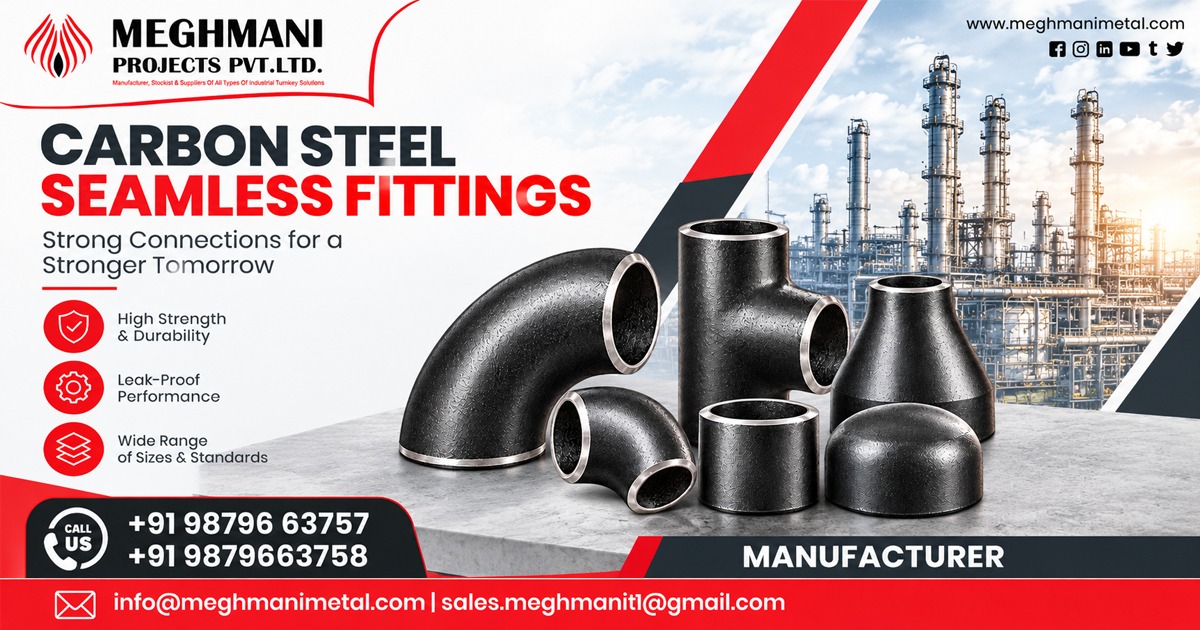
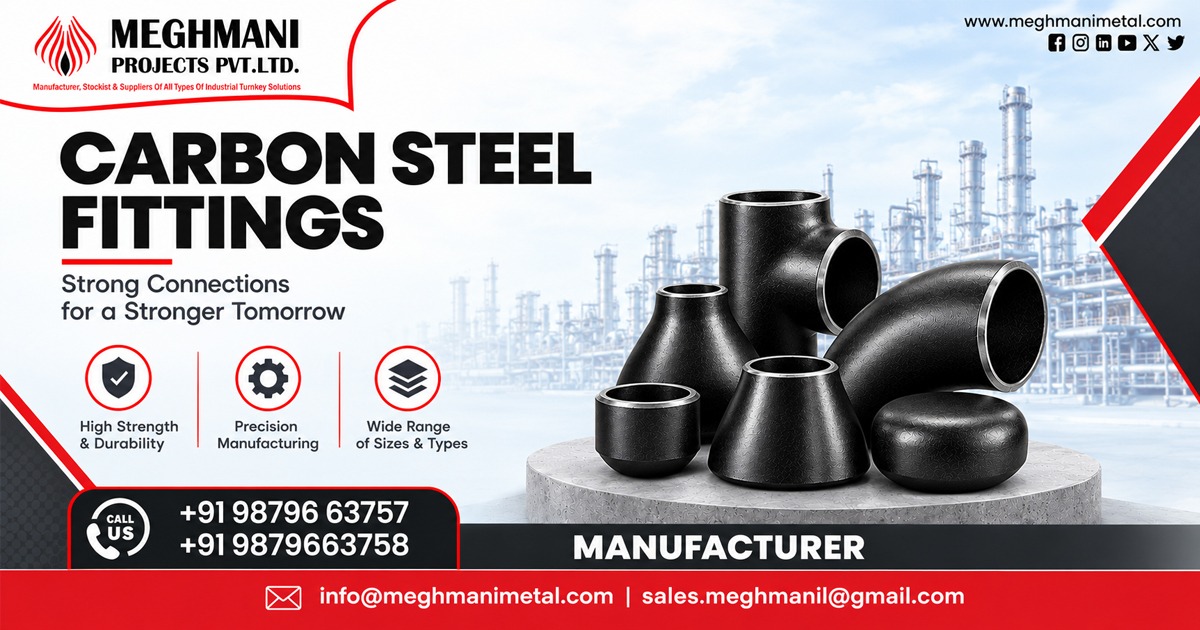
Carbon steel fittings are pipeline components used to connect pipes, change flow direction, create branches, or adjust pipe sizes. They are commonly considered for industrial piping systems where pressure, temperature, mechanical strength, and fluid compatibility matter.
Depending on project requirements, buyers may need elbows, tees, reducers, caps, or other fittings. Selecting the correct type helps simplify pipeline assembly and supports dependable operation across industrial facilities.
For projects involving a Carbon Steel Fittings Supplier In Gandhidham, the first step is to identify the pipeline’s purpose, operating conditions, and required connection details. This helps reduce the risk of ordering components that do not match the design.
What to Check Before Selecting Pipeline Fittings
Before placing an order, review these important factors:
- Fitting type: Determine whether the pipeline requires elbows, tees, reducers, caps, or another configuration.
- Material grade: Match the carbon steel grade with the project specification and operating environment.
- Size and dimensions: Confirm nominal pipe size, wall thickness compatibility, and connection dimensions.
- Pressure and temperature: Check that the selected fittings are suitable for the specified operating conditions.
- Connection type: Verify whether the design requires butt-weld, socket-weld, threaded, or another connection.
- Quantity and delivery: Calculate the required quantity and coordinate delivery with the project schedule.
Providing accurate technical drawings and specifications can help the supplier understand the requirement and reduce ordering errors.
How Carbon Steel Fittings Fit Into Pipeline Installation
Correct selection and installation are important for maintaining pipeline integrity. A typical fitting installation process involves the following stages.
Step 1: Review the Pipeline Design
Check the piping layout, line size, fitting positions, material requirements, and applicable project specifications.
Step 2: Inspect the Components
Verify fitting type, dimensions, material identification, and visible condition before installation. Check the supplied documentation against the purchase order.
Step 3: Prepare the Connections
Prepare pipe ends and fitting connections according to the approved installation procedure. Welding or threading must follow the requirements applicable to the connection type.
Step 4: Inspect and Test the Assembly
Check alignment, joints, and installation quality. Complete the required inspection and pressure or leak testing under the approved project procedure before commissioning.
Quality Checks Buyers Should Complete Before Ordering
A suitable supplier should be able to understand the project’s technical requirements and clarify the product details before order confirmation. Buyers should verify:
- Material grade and traceability documentation, where required.
- Fitting dimensions, wall thickness, and connection details.
- Applicable design codes and testing requirements specified by the project.
- Surface condition and visible manufacturing defects.
- Quantity, packing, dispatch schedule, and delivery arrangements.
For critical pipeline services, confirm that the selected material and fittings meet the project’s engineering requirements. Do not assume that every carbon steel fitting is suitable for every pressure, temperature, or fluid service.
Project-Specific Requirements and Material Coordination
Carbon steel fitting requirements can vary with the pipeline layout, fluid service, operating pressure, and installation method. Some projects require different fitting sizes or configurations across multiple pipeline sections.
Before requesting a quotation, prepare a clear requirement sheet covering:
- Pipe size and required fitting dimensions.
- Material grade and applicable specifications.
- Fitting type and end connections.
- Required quantity for each item.
- Inspection documents and testing requirements.
- Delivery location and expected project timeline.
These details help the supplier assess the enquiry and clarify any technical information that is missing. Availability of special dimensions or grades should be confirmed before ordering.
SERVICES
- Product requirement coordination: Share pipeline specifications and fitting requirements for review.
- Fitting selection assistance: Clarify suitable fitting types, sizes, and connection requirements against the project specification.
- Order and documentation coordination: Confirm quantities, material details, and required purchase documents.
- Delivery planning: Coordinate order details and dispatch expectations for industrial projects.
Industrial Demand Around Gandhidham, Gujarat
Gandhidham and the wider Kutch region have industrial, logistics, port-related, and infrastructure activities where pipeline components may be required for suitable projects. Buyers sourcing a Carbon Steel Fittings Supplier In Gandhidham should consider technical compatibility alongside procurement timelines. Relevant Gujarat locations include Gandhidham, Kandla, Mundra, Bhuj, Anjar, Adipur, Bhachau, Rapar, Samakhiali, Morbi, Rajkot, Jamnagar, Dwarka, Ahmedabad, Sanand, Vadodara, Bharuch, Ankleshwar, Surat, Vapi, Gandhinagar, Mehsana, Palanpur, and Dholka.
How Meghmani Projects Pvt. Ltd. Can Support Your Enquiry
Selecting pipeline fittings involves more than comparing prices. Buyers need to communicate the correct material grade, dimensions, connection type, and operating conditions so the supplied products can be evaluated against the project requirements.
Meghmani Projects Pvt. Ltd. provides a point of contact for discussing carbon steel fitting requirements. With manufacturing support from Ahmedabad, Gujarat, India, buyers can share their specifications and clarify product details before proceeding with procurement.
Visit the company website at meghmanimetal.com to learn more and discuss your requirements.
Frequently Asked Questions
Q1: Which carbon steel fittings are commonly used in industrial pipelines?
A: Common types include elbows, tees, reducers, and caps. The appropriate fitting depends on the pipeline layout, connection method, and engineering specifications.
Q2: How do I select the correct carbon steel fitting size?
A: Check the nominal pipe size, wall thickness, end connection, and dimensional requirements in the approved piping documents before ordering.
Q3: What documents should I request when purchasing carbon steel fittings?
A: Depending on the project, request material test certificates, dimensional details, inspection records, and applicable compliance documents as specified in the purchase order.
Q4: What should I confirm before ordering fittings for a Gandhidham project?
A: Confirm the material grade, quantity, dimensions, connection type, operating requirements, delivery schedule, and any inspection or testing conditions.
Conclusion
Choosing the right carbon steel fittings requires careful attention to material grade, dimensions, connection type, and operating conditions. Industrial buyers in Gandhidham can simplify procurement by preparing clear specifications and checking product documentation. Meghmani Projects Pvt. Ltd. offers a contact point for discussing project requirements with manufacturing support from Ahmedabad, Gujarat, India.
Contact Meghmani Projects Pvt. Ltd. through meghmanimetal.com to discuss your carbon steel fitting requirements and product specifications.
Call Us:
Sales: (+91) 98 79 663757
Support: (+91) 98 79 663758
Email Us:
Sales: sales.meghmani11@gmail.com
General: info@meghmanimetal.com